Loading...
Serving Fontana, CA and surrounding areas. (909) 738-1647
Onestop Fontana Concrete provides stamped concrete, driveways, patios, and retaining walls for Upland homeowners. Many homes here were built in the 1960s and 1970s, and the original flatwork - sitting on clay-heavy soil with 50 years of tree roots and Inland Empire heat working against it - is typically long overdue. We have held a California C-8 concrete contractor license since 2024 and understand what local conditions require before the first yard of concrete goes down.
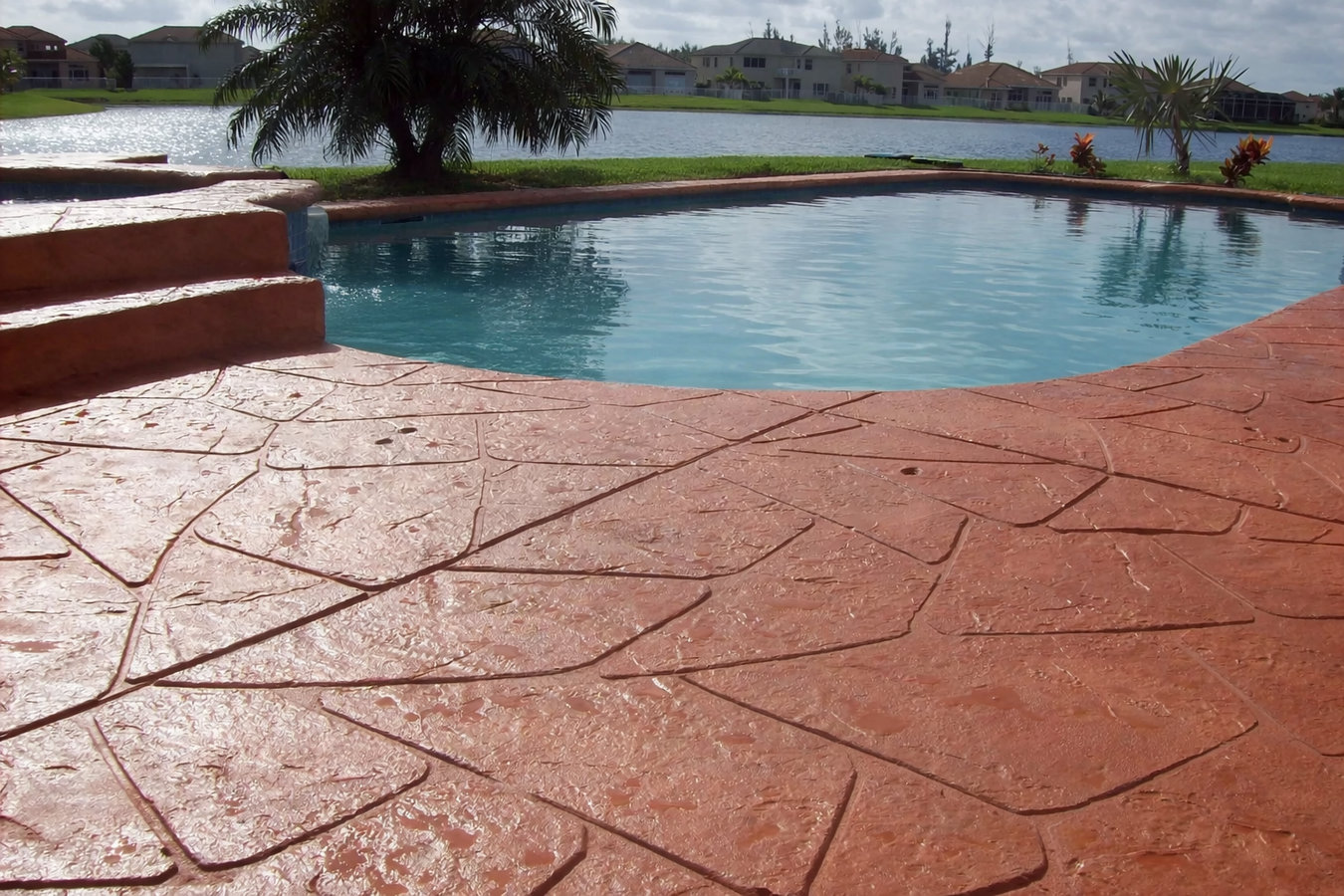
Upland homeowners with well-maintained mid-century homes and manicured yards often want outdoor surfaces that match the care they put into the rest of the property. Stamped concrete gives driveways, patios, and walkways the look of stone or brick at a fraction of the cost of natural materials - and with a UV-resistant sealer to handle Upland's intense sun, the color holds far better than untreated concrete. Learn more about our stamped concrete services.
The older neighborhoods near Euclid Avenue and the historic downtown area have some of the most tree-lined streets in the Inland Empire - and those mature trees have had decades to grow roots under original driveways. When root damage has pushed sections up and cracking has spread beyond what patching can address, a full replacement with root barriers and a properly prepared base is the right approach. We size control joints for Upland's temperature swings so the new slab has room to move without breaking.
Upland's mild winters and long dry season give homeowners one of the best outdoor living climates in Southern California - most backyards are usable year-round. A plain or cracked patio wastes that climate advantage. Whether the goal is a simple finished slab or a stamped and colored surface that matches a recent remodel, we build patios with proper drainage slope and base compaction so the concrete holds up through cycles of clay soil movement.
The north side of Upland - closer to the foothills and the community of Rancho Cucamonga - has more sloped lots that require retaining walls to make yard space usable. Clay soils on these hillside properties hold water after winter rains, and walls without proper drainage weep holes fail within a few years from hydrostatic pressure. We build walls with the drainage design that Upland's soil and slope conditions actually require.
Upland's older neighborhoods are known for their mature tree canopy - which means sidewalk panels lifted by roots are one of the most common repair jobs in the city. Many of these panels have been raised an inch or more and present a genuine trip hazard. We replace individual sections to grade and install root barriers where needed so the problem does not repeat on the newly poured concrete within a few growing seasons.
Many of Upland's mid-century and 1980s homes were built with in-ground pools - a common feature in this part of the Inland Empire where outdoor living is year-round. Pool decks that are 30 or more years old often have surface spalling, settled sections near the coping, and a finish that has lost its grip when wet. We resurface and replace pool decks with a texture finish designed for wet foot traffic and a sealer rated for Upland's UV exposure.
Upland is a city of about 80,000 people at the base of the San Gabriel Mountains, and roughly 55 to 60 percent of households own their homes. The bulk of the housing stock was built between the 1950s and 1980s - single-story ranch-style houses with stucco exteriors, attached garages, and concrete driveways, walkways, and patios that have been working against local conditions for 40 to 70 years. On properties like these, original flatwork is not just aging - it has been absorbing the effects of expansive clay soils and Upland's temperature swings for most of its life. When cracking and settling appear, it is rarely a surface problem. The cause is almost always underneath.
Upland's clay-heavy soil expands when wet and shrinks when dry - a seasonal cycle that puts lateral and upward pressure on everything built on it. Summers regularly push past 95 to 100 degrees Fahrenheit, accelerating the drying phase and widening cracks that formed during the wet season. The city's older neighborhoods add a second layer of complexity: mature trees along Euclid Avenue and throughout the historic core have root systems large enough to lift driveway sections and crack sidewalk panels from below. According to the California Geological Survey, Upland sits in a zone where expansive soil conditions are an active design consideration - not an occasional factor.
Our crew works in Upland regularly and pulls permits through the City of Upland Building and Safety Division. The type of work we see most often here reflects the city's housing stock: root-damaged driveways in the older neighborhoods near downtown, failing original flatwork on 1960s and 1970s ranch homes, and retaining walls on north Upland foothills lots where clay soils hold water after winter rain.
Euclid Avenue is the city's most recognizable street - the wide, tree-lined boulevard that runs through Upland's historic core. The homes on either side of it, and in the grid of neighborhoods surrounding downtown, tend to have the oldest flatwork and the largest tree roots. North of Foothill Boulevard, the newer subdivisions built in the 1980s and 1990s are reaching the age where original concrete is failing for the first time. We service both zones and know what each typically requires in terms of base preparation, joint placement, and drainage design. We also serve customers in nearby Rancho Cucamonga and can coordinate projects that span both cities.
If you are in one of the foothills neighborhoods on the north end, you likely deal with sloped lots and occasional winter drainage that puts hydrostatic pressure on anything built on the hillside. If your home is closer to the historic downtown near the Upland Train Depot, tree root intrusion and aging 1960s slabs are the more common issue. Knowing the difference - and adjusting the base prep and drainage approach accordingly - is what separates a repair that holds from one that needs attention again in three years. We also serve homeowners in neighboring Ontario and can bring that same local knowledge to jobs on either side of the city line.
Call or submit a request online and we will respond within one business day. We schedule an in-person visit to measure the area, assess soil and drainage conditions, and understand what you need - no firm quotes are given over the phone without seeing the site.
After the site visit, you receive a written quote that breaks out labor, materials, demolition, and any permit fees separately - no surprise line items after work starts. If a permit is required by the City of Upland, we handle the application and coordinate inspections on your behalf.
The crew removes existing concrete, grades and compacts the base, installs root barriers where trees are a factor, and sets forms before the pour. In Upland's summer heat, we schedule pours for early morning to avoid surface cracking from rapid drying.
After the pour, keep vehicles off the new surface for at least seven days. We walk the finished project with you before leaving, address any concerns on the spot, and provide written care instructions including when to reseal stamped surfaces. Closed permit paperwork is delivered to you at project completion.
We serve Upland homeowners with free in-person estimates, no-obligation quotes, and permits handled start to finish. Call or request online - we reply within one business day.
(909) 738-1647Upland sits at the base of the San Gabriel Mountains in western San Bernardino County, directly east of Rancho Cucamonga and north of Ontario. The city has long been called the "City of Gracious Living," and the name fits: Euclid Avenue - one of the most recognizable boulevards in the Inland Empire - runs through the center of town with a wide, tree-lined median that gives the area a distinctive character. The neighborhoods flanking Euclid Avenue and the historic downtown near the 1906 Upland Train Depot are where the city's oldest homes are concentrated, mostly single-story ranch houses built between the 1950s and 1970s on moderate-sized lots. Upland's overall owner-occupancy rate runs above the California state average, and the median home value has consistently been higher than neighboring Inland Empire cities - signs of a community that invests in maintaining its properties.
North Upland, closer to the foothills and the border with Rancho Cucamonga, has newer construction from the 1980s and 1990s - larger, two-story homes on slightly bigger lots with tile roofs and stucco exteriors. Mount Baldy, the high peak in the San Gabriel Mountains, is visible from almost everywhere in Upland and defines the northern horizon for every resident. The southern portion of the city connects to Ontario along Foothill Boulevard, and many residents travel that corridor regularly. Across both the older downtown neighborhoods and the newer foothills subdivisions, the concrete work needs are different - but the soil and climate conditions that drive them are the same.
Durable, professionally poured concrete driveways built to last.
Learn moreSafe, level sidewalks installed to code for residential and commercial properties.
Learn moreStrong garage floor concrete designed to handle heavy vehicles and daily use.
Learn moreSolid retaining walls engineered to control erosion and manage slopes.
Learn moreSmooth, level concrete floors for homes, warehouses, and commercial spaces.
Learn moreSlip-resistant, attractive pool deck surfaces built for comfort and safety.
Learn moreSturdy concrete steps crafted for curb appeal and long-term durability.
Learn moreExpertly poured slab foundations providing a strong base for any structure.
Learn moreComplete foundation installation services for new construction projects.
Learn moreCommercial-grade concrete parking lots built for high traffic and longevity.
Learn moreProperly engineered concrete footings to support fences, walls, and structures.
Learn moreFoundation raising solutions that restore level and structural integrity.
Learn morePrecision concrete cutting for modifications, repairs, and new installations.
Learn moreServing these cities and communities.
Every season of heat and soil movement makes damaged concrete worse - call now or request a free in-person estimate and we will schedule a visit within a few days.