
Loading...
Serving Fontana, CA and surrounding areas. (909) 738-1647
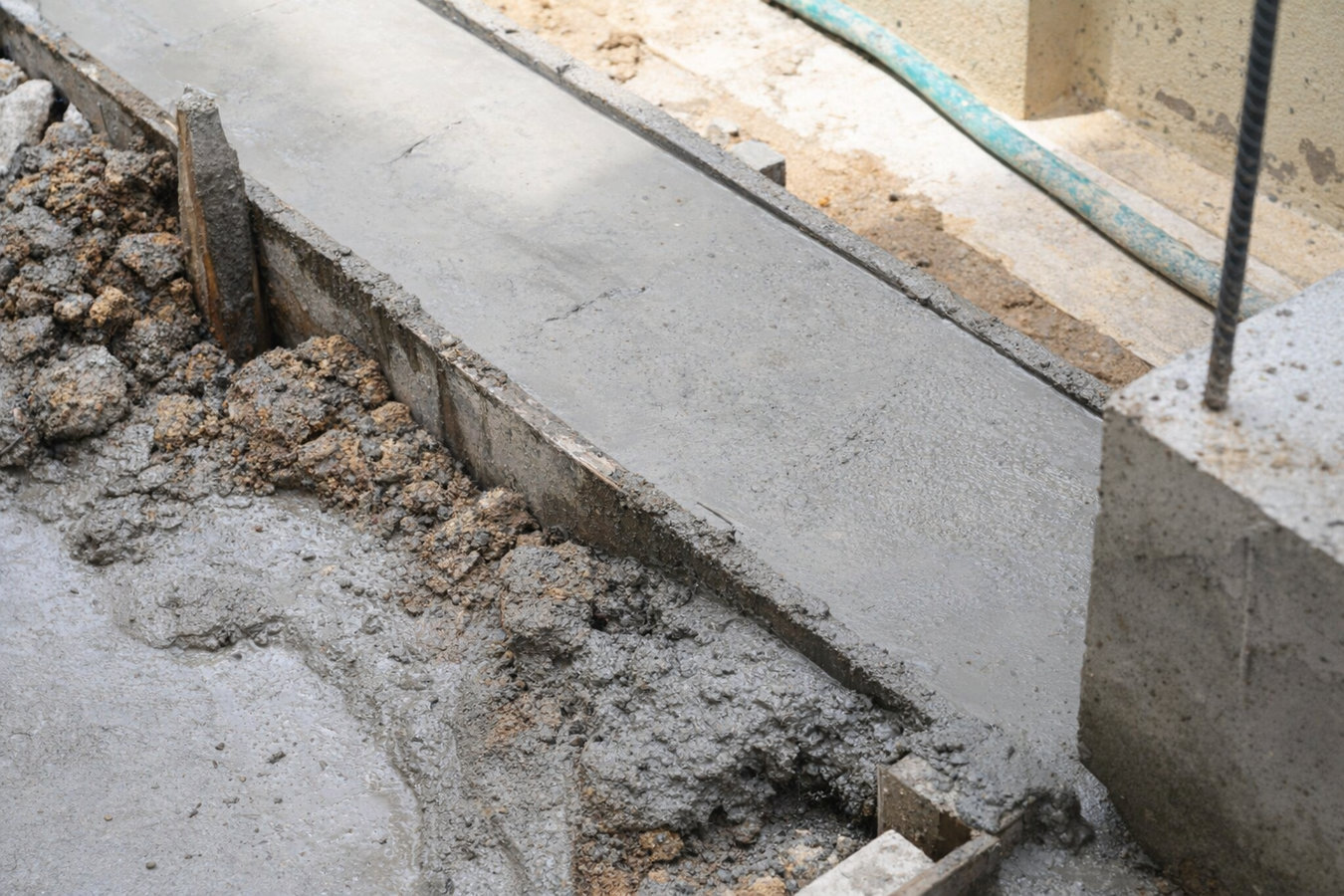
Has your driveway, patio, or garage floor dropped or tilted? We lift sunken concrete back to level using proven methods - for a fraction of what full replacement would cost.
Foundation raising in Fontana lifts sunken concrete slabs back to their original level position by pumping material beneath them through small drilled holes - most residential jobs on a driveway, patio, or garage floor are completed in a single day, and the surface is ready for normal use within 24 hours.
If you have noticed a lip between two sections of your driveway, a patio corner that sits lower than it used to, or a garage floor that tilts toward one wall, the concrete has not failed - the ground beneath it has shifted. Foundation raising in Fontana addresses that problem directly, without tearing out and replacing perfectly sound concrete. In most cases it costs 50% less than a full replacement and leaves you with the same level, safe surface. When the slab itself is too far gone to lift, a full slab foundation build may be the better path - and we will tell you honestly which situation you are in before any work begins.
The key to a lasting result is understanding why the slab sank in the first place. Fontana's clay-heavy soil swells and shrinks with every wet and dry season, and much of the city was built on mass-graded fill that was not always fully compacted. A contractor who just drills and pumps without looking at drainage and soil conditions is treating the symptom, not the cause. We walk you through what we find so you can make a confident decision.
Walk your driveway or patio and notice whether any section feels lower than the one next to it. Even a half-inch step between two slabs is enough to catch a foot or a vehicle bumper. In Fontana, this kind of uneven settling is common after a dry summer, when the clay soil beneath the slab has contracted and left a gap. The gap gets wider every dry season if nothing is done.
Long cracks that run in a relatively straight line across concrete often mean one section has dropped while the other held its position. If you can see daylight under the edge of a slab, or if one side of the crack sits noticeably higher than the other, the slab has settled - not just aged. This is different from cosmetic surface cracks and signals that the soil below has moved.
If your garage door stopped closing flush, or a door near your patio started binding after the rainy season, a nearby slab may have shifted. Fontana's wet winters cause the soil to swell and then settle unevenly, and that movement can transfer to the structure above it. This is one of the less obvious signs that something is happening beneath the surface - and one of the easiest to miss until the problem gets worse.
If water collects against your home's foundation or in low spots on your driveway after rain, the concrete has dropped and is now directing water toward your home instead of away from it. In Fontana, where winter rains can arrive suddenly and heavily, this drainage problem accelerates soil erosion and makes settling worse over time. A sunken slab that channels water toward the house is a structural concern, not just a cosmetic one.
We offer both mudjacking and polyurethane foam lifting depending on what your specific slab needs. Mudjacking - which pumps a cement-and-soil mixture beneath the slab through small drilled holes - is the proven, cost-effective choice for most residential driveways and patios. It has been used for decades and holds up well in Fontana's climate when drainage conditions are properly assessed. Polyurethane foam lifting uses an expanding foam that is lighter, cures faster, and leaves even smaller holes - a good fit for slabs where additional weight is a concern or where a faster return to use matters. Both methods avoid the cost and disruption of a full replacement, and we assess every job to recommend the right approach for the specific slab, soil, and situation. If the slab is too damaged to lift, we will be direct about that - and we can refer you to our concrete cutting and slab replacement services so the project stays on track.
Every foundation raising job we do starts with a site assessment - not just a look at the top of the slab, but an evaluation of what is likely beneath it, how drainage is working around the edges, and whether any irrigation or downspout is contributing to soil erosion. According to the Concrete Foundations Association, the most common reason foundation raising jobs fail is that the underlying soil cause was never identified or addressed. We make the assessment part of every project, not an optional add-on.
For most residential driveways, patios, and garage floors - cost-effective, well-proven in Inland Empire clay soils, and ready for vehicle use within 24 hours.
For homeowners who need a faster cure time, lighter fill material, or smaller injection holes - particularly suited to pool decks and decorative surfaces.
Included with every job - we identify whether irrigation, downspouts, or grading are contributing to settling so the fix actually holds over time.
Fontana sits in the Inland Empire on alluvial fan deposits underlain by expansive clay soils. Those soils swell when they absorb water during winter rains and shrink again during the long, hot summers - a cycle that puts constant stress on concrete from below. The city also grew rapidly during the 1980s through the early 2000s, with large tracts of homes built on mass-graded land where fill soil compaction was not always consistent. Slabs poured over under-compacted fill are significantly more prone to settling than slabs on undisturbed native soil - which is why foundation raising calls are so common in Fontana neighborhoods built during that growth period. Homeowners in Rialto and Ontario face the same soil conditions and see the same pattern of settling slabs - this is an Inland Empire-wide reality, not a problem specific to any one neighborhood.
Santa Ana wind events, which blow hot dry air across the region from fall through winter, accelerate soil shrinkage by pulling moisture from the ground quickly. Extended drought periods have the same effect. Homeowners who have gone through several dry years without maintaining drainage or irrigation near their concrete are at higher risk of significant settling. The good news is that in most cases the slab itself is still sound - it just needs to be returned to its original position and kept there with better drainage management.
When you call, we will ask a few basic questions - where the sinking is, roughly how large the area is, and how long you have noticed the problem. You do not need to prepare anything. Most homeowners in Fontana can have a site visit scheduled within a few days, and we respond to all inquiries within one business day.
We walk the area with you, check how much the slab has dropped, look for cracks, and assess drainage around the edges. At the end of the visit you receive a written estimate and an explanation of which lifting method we recommend and why - not a pressure pitch, just a clear explanation of what we found.
Before the crew arrives you clear vehicles, furniture, and anything sitting on or near the slab - most homeowners find this takes under 30 minutes. The contractor will tell you exactly what needs to move. If a permit is required for the scope of work, we handle the application with the City of Fontana - you do not manage that process yourself.
The crew drills small holes through the slab at measured intervals, pumps material beneath it, and monitors the rise until the slab reaches the correct level. For most residential jobs this takes two to four hours. The drill holes are patched with concrete before the crew leaves, and the surface is ready for foot traffic within a few hours.
We assess the slab, explain what caused the settling, and give you a written quote before any work begins. Call us or submit the form - we reply within one business day.
(909) 738-1647We have assessed foundation raising jobs across Fontana and the Inland Empire since 2024. We tell every homeowner upfront whether raising is the right call or whether replacement makes more sense for their specific slab - even when replacement is the larger job. If someone quotes raising without examining the slab in person, that is a red flag worth noting.
Fontana's Inland Empire clay soils are not the same as coastal California soils, and lifting a slab here requires understanding how that soil behaves through wet and dry seasons. We account for drainage conditions and seasonal soil movement in every assessment - which is why results last instead of settling again within a year. The American Concrete Institute recommends soil assessment before any lifting project for exactly this reason.
Most residential foundation raising jobs in Fontana are done in a single day. The drill holes are patched before we leave, the work area is cleaned, and you can use the surface again the same afternoon. There is no torn-up concrete, no debris pile, and no waiting weeks for a new pour to cure. We work efficiently because we know homeowners have lives to get back to.
Our California C-8 concrete contractor license is active and in good standing. You can look it up on the CSLB website in about 30 seconds. That license confirms we carry required insurance and have met California's training standards - and it gives you legal recourse if anything goes wrong, which is not the case with an unlicensed crew.
A level slab is safer to walk and drive on, drains water away from your foundation instead of toward it, and is one less thing a home inspector can flag when you sell. We lift it right the first time so it stays that way.
When a sunken slab is too damaged to raise and needs to be removed, precise concrete cutting separates the affected section cleanly without disturbing surrounding concrete.
Learn moreIf raising is not the right solution and a new pour is needed, slab foundation building covers the full replacement from excavation through finished surface.
Learn moreBefore the next rain season makes the settling worse - call or submit the form and we will get back to you within one business day with a written estimate.